EqualSplit is a working project, not a finished one. This page is where we post what we're building, what we're testing, and where the gates are going. Newest first.
THE EQUALSPLIT APP IS ON THE APP STORE
Our app, EqualSplit Timing, is now on the App Store for iPhone and iPad. We first ran an early version of it in person at a real session back in June. It is now ready for any coach using our gates.
The gates still take the time. They sync their clocks with each other over their own radio link, and every time comes from that shared clock, not from Bluetooth or the phone. The phone isn't part of the timing, so the gates stay accurate to roughly ±5 milliseconds whether or not it is connected. What the app does is run the session around them.
Here is what it adds:
A roster and a lineup. Put athletes in groups, set today's lineup, and the app moves to the next athlete after each run. You can skip, undo, jump ahead, reorder, and save lineups as templates.
More drills. L Drill, Shuttle Run, Continuous laps with an optional lap target, and Repeats with rest, where each rep is saved on its own and rest is never counted.
Progress over time. Each athlete's page has a chart for every drill, marking their best, their latest, and their PRs. History is sorted by session and day, with session averages and notes on runs.
Video timing. Record at 30, 60, 120, or 240 fps, or import a clip, then mark the start and finish frame by frame. The app shows the error margin next to each time and refuses slow-motion and time-lapse clips.
A big live readout. It settles on the measured time at the finish, and it fills the screen on an iPad.
You don't need it. The gates time every run on their own, exactly as they did before. If you do use it, turn on one setting and runs started from the gate button are saved to the app too, as long as the phone is connected.
Everything stays on your device. There is no account, nothing is uploaded, and the camera never records sound. The details are on our privacy page.
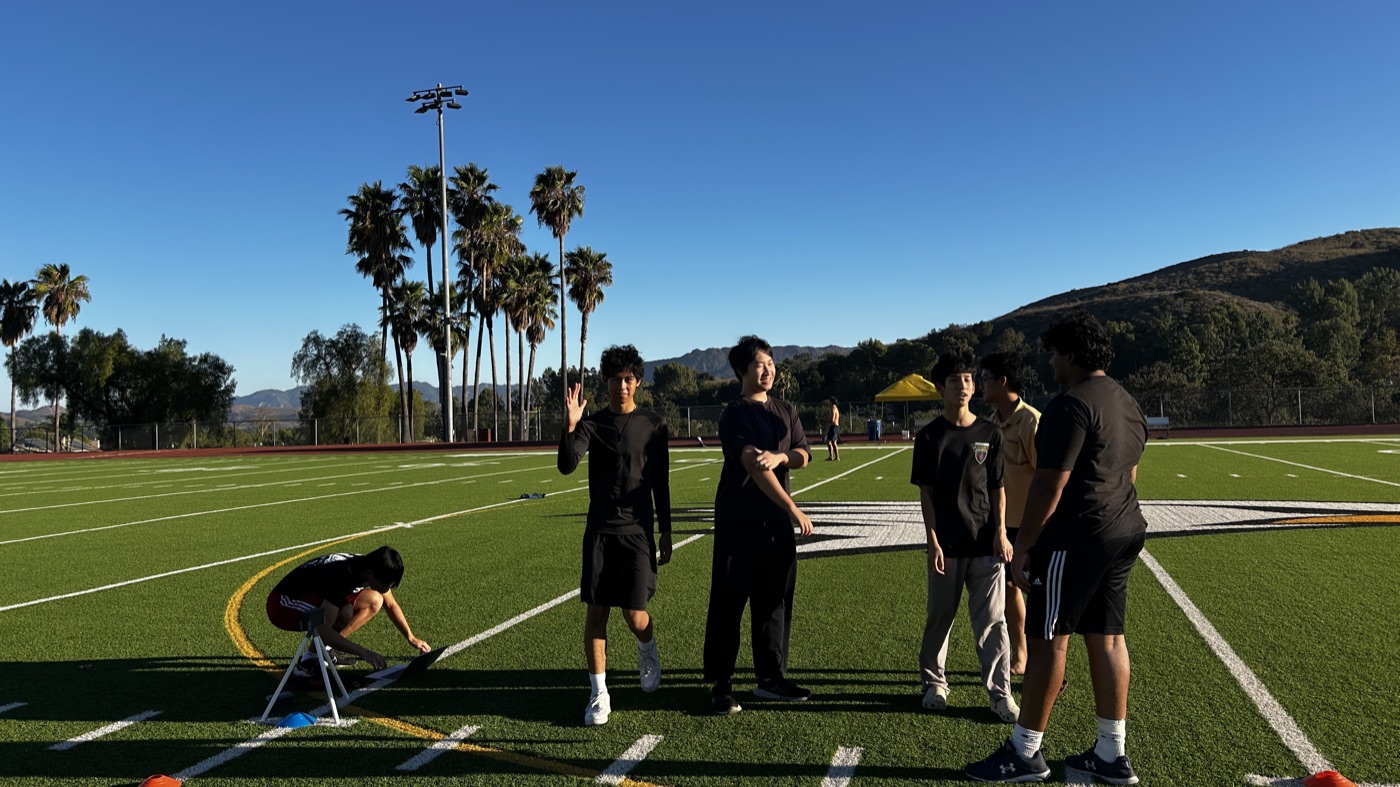
Jayden and I presented to the Kiwanis Club of Thousand Oaks this morning: how the gates work, why timing equipment normally costs what it does, and what that price means for a program that cannot afford it. We ran a live demo in the room and asked for help scaling what we build.
They funded us, committing $1,590, which covers 10 sets plus helping us scale: prototyping funds, a 3D printer, a soldering iron, and safety equipment.
Those 10 sets go to 10 programs, reaching over 1,000 athletes.
Thank you to the members for hearing out two high schoolers, and to Kathy in particular.
ATHLETES AT CARPINTERIA HIGH
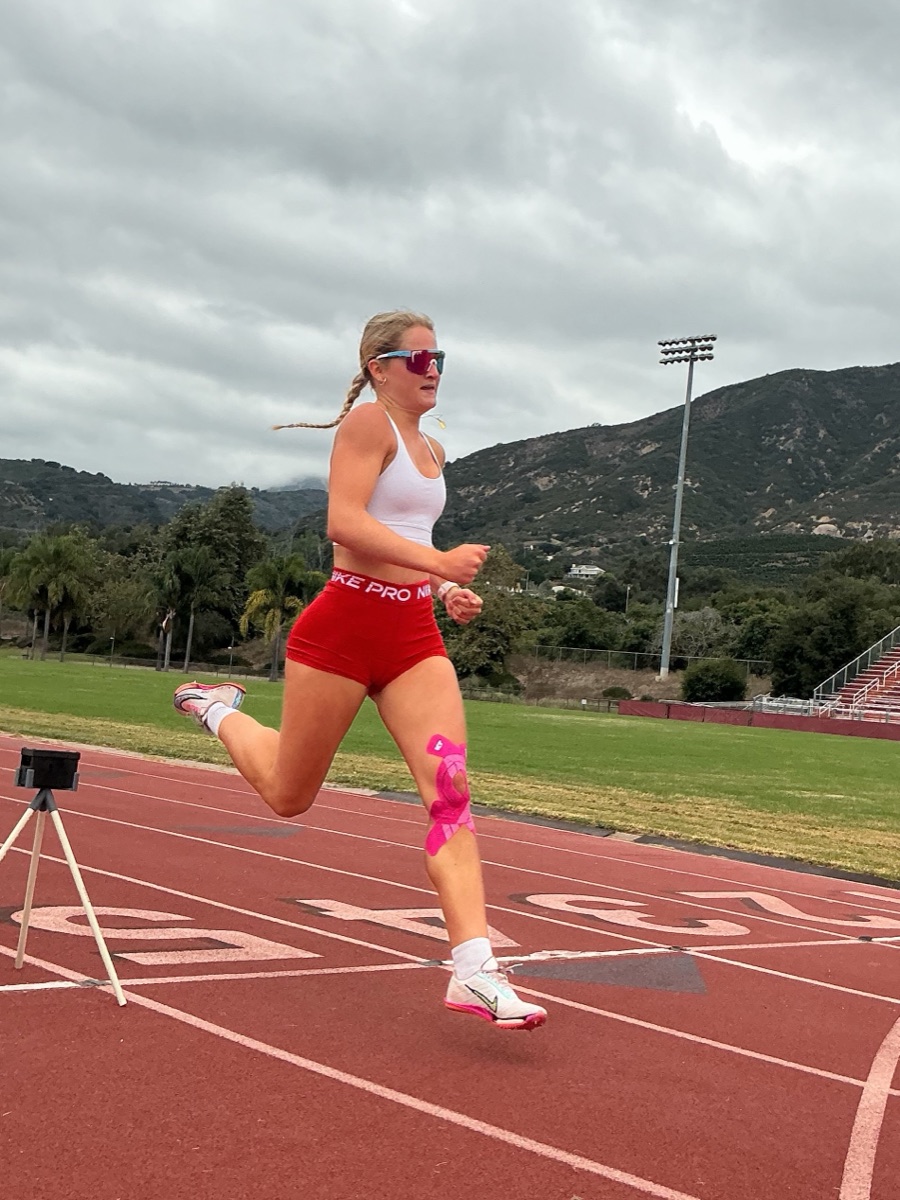
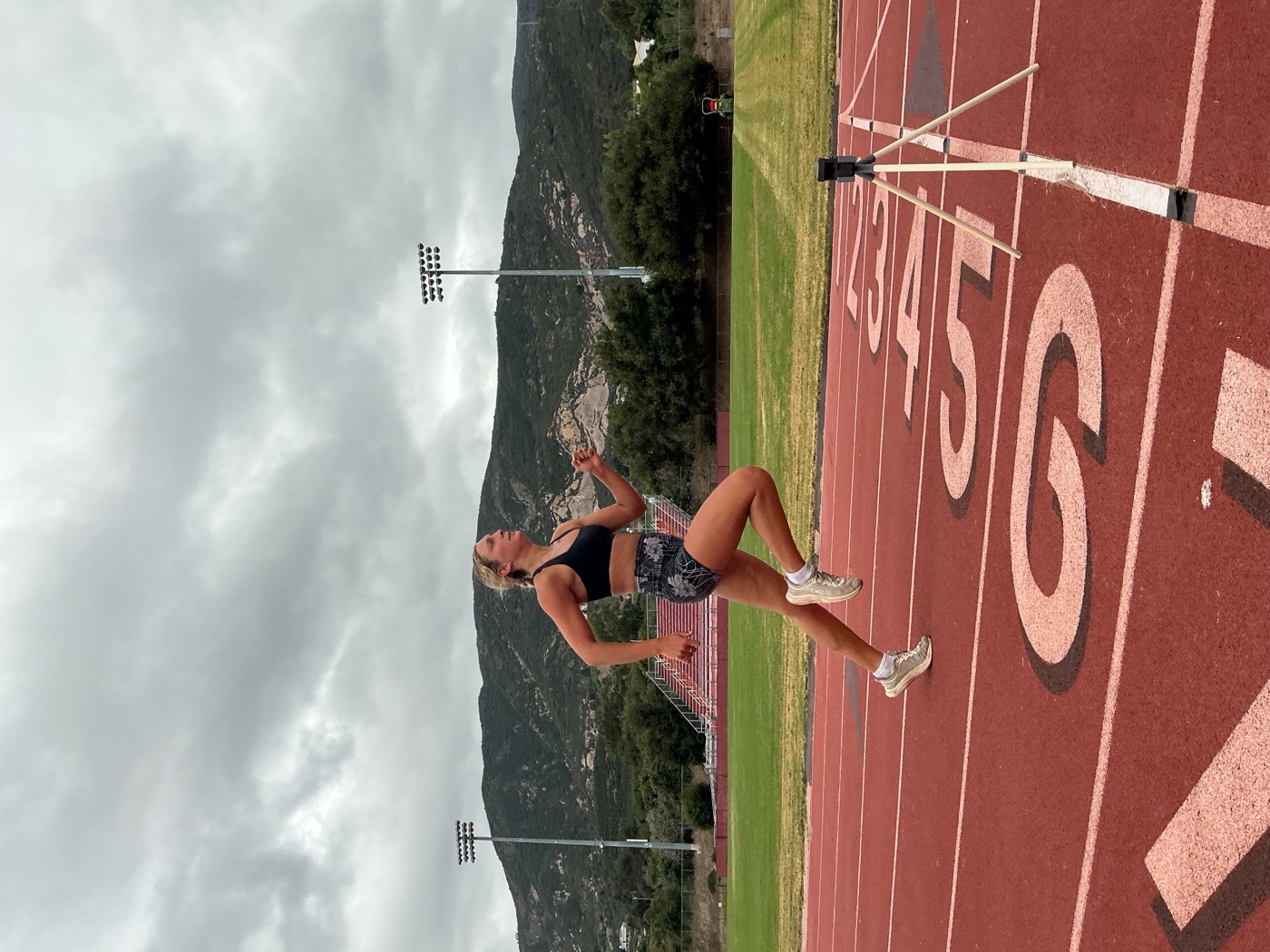
Coach Larralde at Carpinteria High sent us these and said we could share them. His athletes are using the gates in regular practice.
A SESSION WITH LOCAL ATHLETES
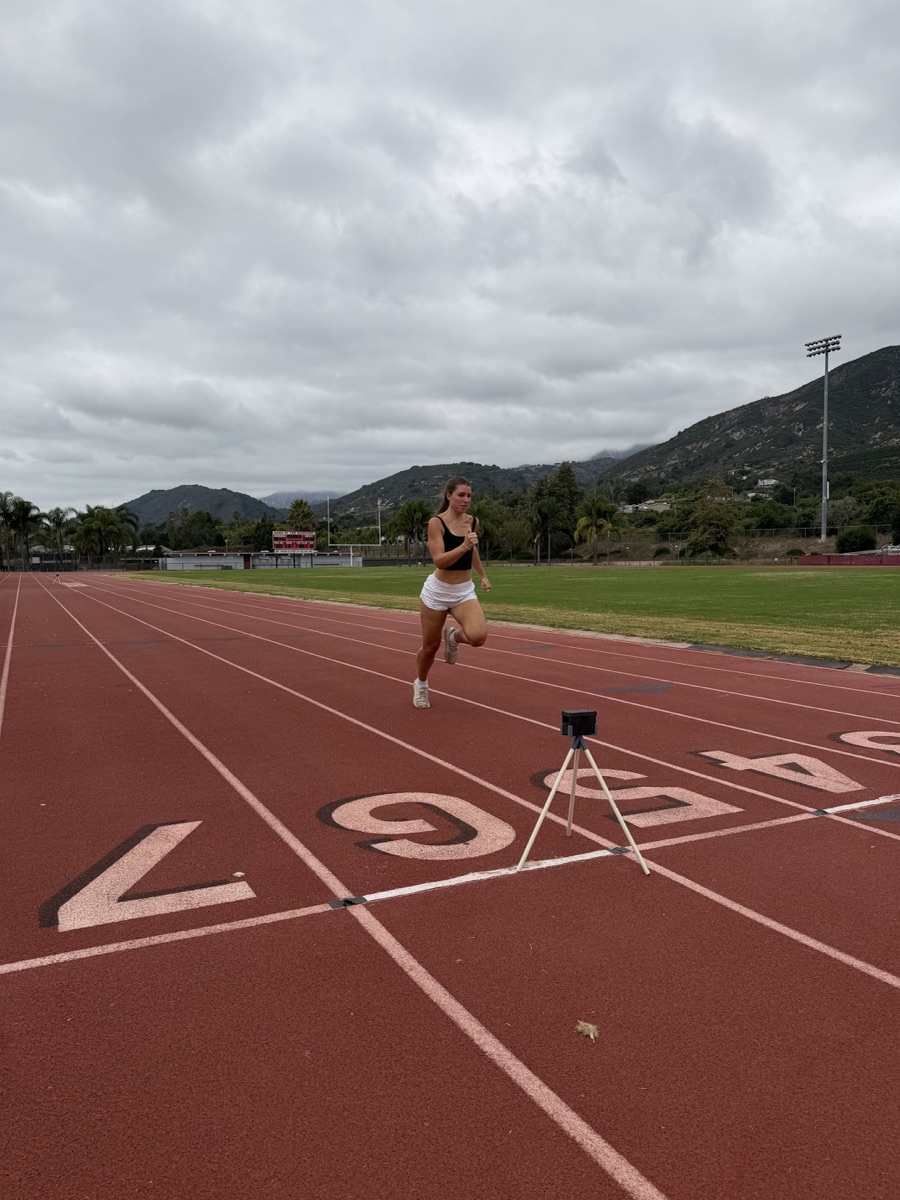
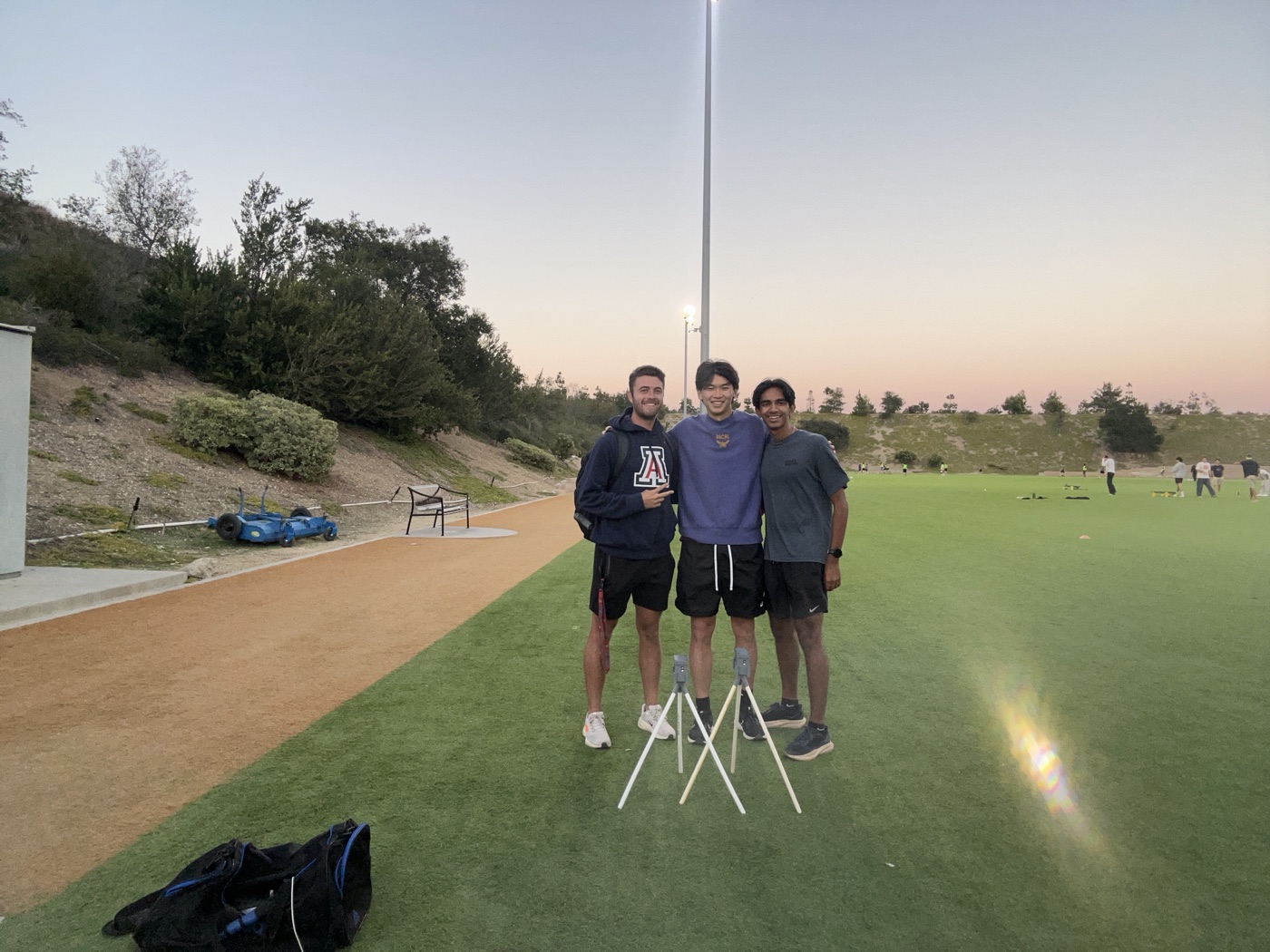
We spent an afternoon on the track timing local athletes. Mostly 40-yard dashes and football combine drills, with the gates set up the way a program would actually use them.
Running a real session also showed us things we hadn't thought about. How fast the setup has to go up between drills. How the gates need to behave when a group is moving and nobody wants to wait around.
SECOND-REVISION CIRCUIT BOARDS
We finished a revision of the circuit board that runs each gate. We design these ourselves in KiCad and have them fabricated, which is a large part of why a set costs a fraction of what commercial equipment does.
The changes are the unglamorous kind that make hardware dependable in the field: more stable power delivery so the sensor reads consistently under load, cleaner connections between the components, and a rework of how the buttons are wired so a gate starts up reliably every time rather than almost every time. Equipment that gets handed to a coach and used outdoors has to work without anyone thinking about it.
This revision feeds directly into the units we donate. Every improvement to the board is an improvement to what a program receives for free.
THE FIRST DONATED UNIT IS FUNDED
Our funding model is simple. We keep the price of a set as close to the cost of the parts as we can, and the small margin left over pays for a set we give away. No one here takes a salary, so nothing gets skimmed off in between.
In late June that stopped being a plan on paper and started being a number in an account. The margin from our first set went where we said it would, toward hardware for a program that will not pay for it. That is the whole mechanism, and it works the same way for every set after this one.
ACCURACY, VERIFIED
Before we were willing to hand these to a coach, we wanted a number we could stand behind. Gravity gave us one. A ball dropped from a known height falls on a schedule physics can predict to the millisecond, so we dropped balls through the gates and compared what they recorded against what the math said should happen.
The gates came in accurate to roughly five milliseconds. Hand timing with a stopwatch is off by more than two hundred. That gap is the reason this project exists.
TESTING AGAINST COMMERCIAL EQUIPMENT
Nathan Farhit coaches at NF Speed & Performance and already owns commercial timing equipment. We brought our gates to one of his sessions and set them up next to his, timing the same athletes on the same runs.
It was also the first time we ran the app in person, on a real session, instead of testing it ourselves.
WHERE THIS IS HEADED
We are a student-run 501(c)(3) nonprofit, and the work continues through the school year: more sessions with local programs, continued hardware refinement, and getting donated units into the hands of schools and clubs that apply.